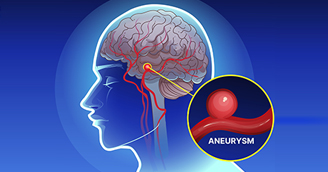
What is a Brain Aneurysm?
A brain aneurysm is a weakened or bulging area in the wall of a blood vessel in the brain. It is often compared to a balloon-like swelling and may remain asymptomatic until it enlarges or ruptures.
If an aneurysm ruptures, it can lead to a life-threatening condition known as a hemorrhagic stroke, requiring immediate medical attention.
Symptoms of Aneurysm
Unruptured aneurysms may not cause symptoms, but when present:
- Persistent or severe headache
- Vision disturbances
- Pain above or behind the eye
- Numbness or weakness
Symptoms of ruptured aneurysm:
- Sudden severe headache (“worst headache of life”)
- Nausea and vomiting
- Loss of consciousness
- Seizures
Diagnosis and Evaluation
Accurate diagnosis is essential for timely management of aneurysms.
- CT Scan or MRI Brain
- CT Angiography / MR Angiography
- Digital Subtraction Angiography (DSA)
Aneurysm Treatment Options
Treatment depends on the size, location, and risk of rupture.
Coiling:
- Minimally invasive endovascular procedure
- Tiny coils are placed inside the aneurysm to block blood flow
- Prevents rupture and reduces risk of bleeding
Flow Diversion:
- Placement of a specialized stent within the artery
- Redirects blood flow away from the aneurysm
- Promotes natural healing of the vessel wall
Both procedures are performed using advanced imaging guidance and are less invasive compared to open surgery.
Recovery and Follow-Up
Recovery depends on the type of procedure and patient condition.
- Short hospital stay in most cases
- Regular follow-up imaging to monitor healing
- Medications as advised
Prevention
- Control blood pressure
- Avoid smoking
- Maintain a healthy lifestyle
- Regular check-ups if at risk
Check the Links